

Wordle is a simple word puzzle with an unusually powerful appeal. Players have six attempts to guess a hidden five-letter word. After each guess, colored tiles indicate whether letters are correct and in the right place, present elsewhere in the word, or not included at all. The rules take seconds to learn, but finding the answer can demand careful reasoning, a broad vocabulary, and a little luck.
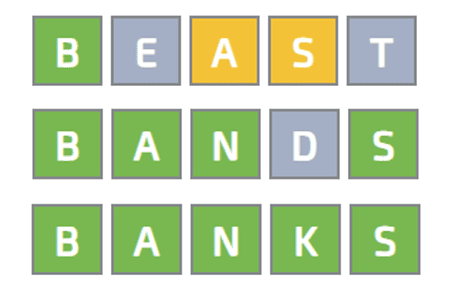
How the game works
Each guess must be a valid five-letter word. A green tile means the letter is correct and correctly placed; yellow means the letter appears in the answer but belongs in a different position; and gray means it is not in the answer. Players use this feedback to narrow the possibilities.
For example, if a guess reveals that A is green in the second position and R is yellow, the next guess should preserve the A while testing a new position for R. Strong players also consider repeated letters, which can make some answers less obvious than they first appear.
Wordle’s once-a-day format is central to its design. Rather than offering endless rounds, it gives everyone the same daily puzzle. Players can share colored grids showing how they solved it without revealing the word, creating a small social ritual around the game.
Why Wordle became popular
Part of Wordle’s success comes from its balance of accessibility and challenge. Unlike games that require specialized knowledge or long sessions, it is free of complicated rules and can be completed in a few minutes. Its limited number of guesses makes each decision matter, while the daily reset gives players a reason to return without demanding hours of attention.
The shareable grid also helped the game spread. A player can show the pattern of green, yellow, and gray squares while keeping the answer secret. Friends, colleagues, and online communities can compare results and discuss strategies. The puzzle is individual, but the conversation around it is communal.
The New York Times acquired Wordle in 2022 and incorporated it into its broader games offering. The game’s core format remained familiar, helping preserve the appeal that had already attracted a large audience. Its placement alongside other word and logic games also reflects a broader interest in short, regular puzzles.
Strategy, skill, and luck
A common strategy is to begin with a word containing several frequent letters, such as S, T, A, R, or E. A good opening guess may reveal useful information even when it is nowhere near the answer. After that, players can choose between testing many new letters or using a plausible word that fits the clues.
There is no universally best approach. A guess that maximizes information may be less satisfying than one that feels like a direct attempt at the answer. And some puzzles depend on luck: an early guess might leave several possible words, forcing players to choose among them with limited evidence. Repeated letters, less-common vocabulary, and competing valid answers can make a puzzle especially tricky.
Criticisms and broader significance
Wordle is intentionally brief, but that simplicity can also frustrate players. A narrow range of answer words may disadvantage people with different vocabulary backgrounds, and a run of difficult puzzles can make the game feel more like a test than a pastime. Others may dislike the pressure of protecting a winning streak or seeing online spoilers.
Still, Wordle’s popularity points to the appeal of small, shared challenges. It offers a moment of concentration, a clear endpoint, and an easy way to connect with other people. Whether approached as a vocabulary exercise, a daily habit, or a friendly competition, Wordle shows how a handful of letters can turn a simple puzzle into a meaningful part of people’s routines.



