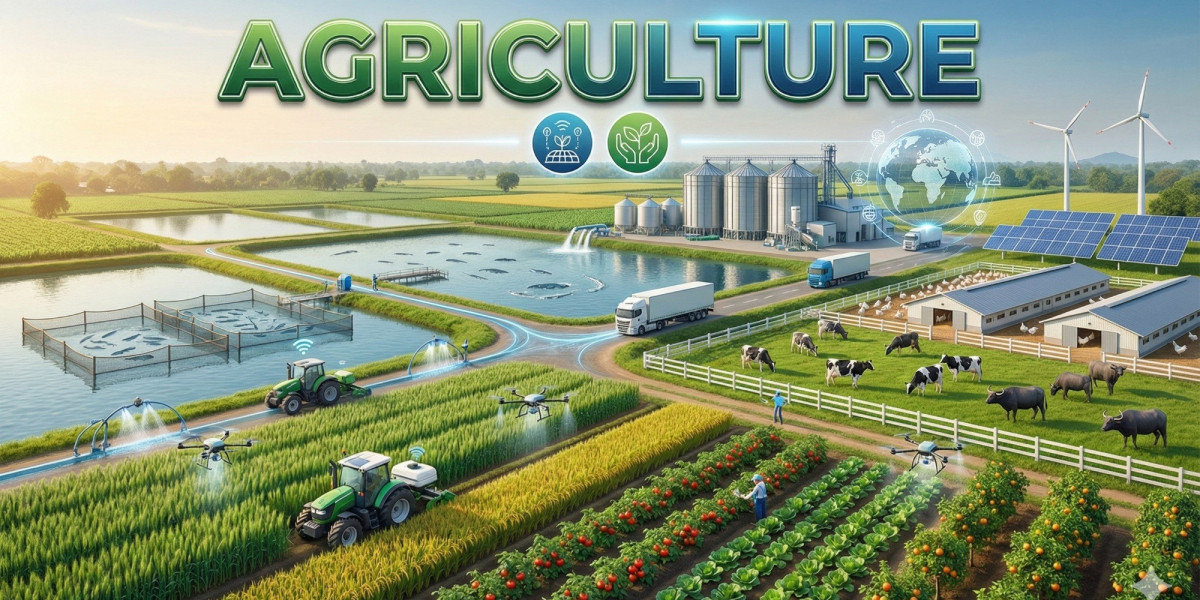

Agricultural mechanization is creating new opportunities for the Forage Harvester Market as farming businesses seek ways to improve productivity and respond to growing livestock-feed requirements. Asia-Pacific is an important region to monitor because agricultural practices, farm structures, livestock production, and equipment adoption are evolving across several countries.
Regional Demand and Agricultural Development
The demand for forage harvesting equipment is closely connected to livestock farming and the availability of suitable feed crops. As dairy and livestock operations pursue more organized feed-management practices, efficient harvesting becomes increasingly important.
In developing agricultural economies, mechanization can help address labor availability challenges and improve the speed of field operations. Forage harvesters offer a way to collect and process suitable crops more efficiently than labor-intensive methods.
However, adoption patterns differ across countries. Large commercial farms may invest in high-capacity self-propelled equipment, while smaller farms may prefer tractor-mounted machinery or contract harvesting services. Equipment affordability, local crop conditions, dealer networks, and financing access all influence purchasing decisions.
Opportunities for Manufacturers
Manufacturers can expand their market presence by offering machinery that reflects regional requirements. Compact designs, straightforward controls, reliable performance, and accessible spare parts can be particularly relevant in markets where farms have limited maintenance resources.
Distribution partnerships and after-sales services are also important. Farmers need timely access to technical support, replacement components, and operator training to maximize machinery utilization during the harvesting season.
Custom-hiring centers and agricultural contractors represent another potential opportunity. By serving multiple farms, these providers can distribute equipment costs across a larger customer base and make mechanized harvesting accessible to farmers who cannot justify purchasing a machine independently.
Explore the global forage harvester market outlook for additional information on market segments and regional opportunities.
Competitive Landscape
Established agricultural equipment companies compete through product performance, technological innovation, dealer coverage, and service quality. Leading participants include John Deere, AGCO Corporation, CLAAS, CNH Industrial, Kuhn Group, and Krone.
Competition also creates opportunities to introduce products at different price points. Manufacturers that combine dependable machinery with practical financing and localized customer support may be better equipped to serve diverse agricultural markets.
Future Outlook
The regional outlook will depend on livestock-sector development, government support for mechanization, farm investment, and the availability of skilled operators. Continued improvements in equipment accessibility and maintenance infrastructure could support wider adoption.
FAQs
1. Why is Asia-Pacific important to the forage harvester market?
The region offers opportunities associated with livestock farming, agricultural modernization, and increasing interest in mechanized crop harvesting, although adoption varies by country.
2. How can small farms access forage harvesting machinery?
Small farms may use tractor-mounted harvesters, cooperative ownership, custom-hiring services, or agricultural contractors instead of purchasing high-cost equipment individually.



