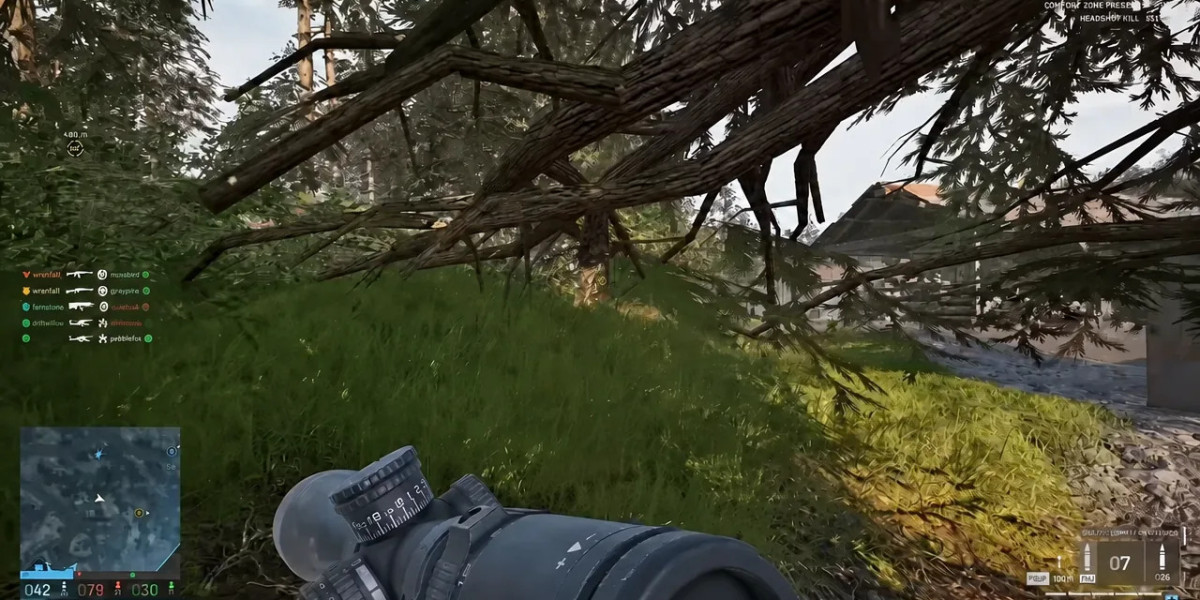

A good WARDOGS player does not need to win every firefight to build a healthy in-game economy. The game rewards a wide range of activities, including capturing objectives, reviving teammates, transporting friendly soldiers, spotting enemies, and supporting battlefield logistics. This creates an interesting progression system in which different playstyles can produce meaningful financial results. Learning how to earn Wardogs Bot Lobby cash efficiently is therefore less about chasing eliminations and more about recognizing which activities offer the greatest value during a particular match. With three factions competing across a large battlefield, players have plenty of opportunities to earn rewards while helping their teams. The challenge is knowing when to fight, when to support, and when to move toward a more profitable objective.
Understanding the Economy Behind Every Match
WARDOGS uses a persistent cash system that connects individual lives with longer-term progression. Players start with a basic balance and purchase weapons, equipment, vehicles, and other resources whenever they deploy. Money earned during combat can remain available between matches, making spending decisions important beyond a single round.
The system creates an interesting relationship between risk and reward. A heavily equipped soldier may have a stronger chance of surviving a difficult engagement, but an expensive loadout can also become a costly mistake if the player repeatedly enters dangerous situations without earning enough to cover the investment.
A more sustainable strategy involves matching equipment costs to the expected role. Assault players need practical weapons for frequent engagements, while Medics may gain more from medical equipment that allows them to support several teammates during one deployment.
The following activities illustrate why the economy is closely connected to teamwork.
| Activity | Battlefield contribution | Why it matters |
|---|---|---|
| Capturing objectives | Helps the faction earn match points | Supports both victory and income |
| Reviving teammates | Returns players to active combat | Maintains squad strength |
| Transporting soldiers | Moves friendly players toward important areas | Reduces travel time |
| Spotting enemies | Provides information to teammates | Helps organize attacks |
| Repairing vehicles | Keeps valuable equipment operational | Supports prolonged operations |
| Building defenses | Strengthens important positions | Makes objectives harder to attack |
The important lesson is that combat is only one part of the economy. Players who explore several roles may discover more consistent ways to earn money than those who depend entirely on eliminations.
Hot Zone Farming Requires Good Positioning
The Hot Zone is one of the most interesting opportunities for players who want to improve their match earnings. It introduces a more valuable area within the larger objective system, encouraging factions to compete for control rather than remaining scattered across the map.
The additional reward makes the area attractive, but that does not mean players should rush into it without preparation. A Hot Zone can quickly become a crowded battlefield where several squads are trying to establish control at the same time.
The first step is to identify the safest approach. Buildings, damaged structures, roads, and open terrain all create different opportunities for attacking and defending. Players who understand the surrounding environment can often find useful positions before the opposing factions arrive.
A coordinated squad should consider dividing its responsibilities:
• Assault players clear nearby enemy positions.
• Recon players identify incoming opponents and watch surrounding approaches.
• Medics remain close enough to restore fallen teammates.
• Support players maintain ammunition and other logistical needs.
• Drivers help move reinforcements toward the contested area.
This arrangement prevents the entire squad from concentrating on the same task. It also reduces the chance that an unexpected attack will leave the objective completely undefended.
Another useful habit is to avoid remaining inside an exposed position simply because it is generating rewards. If enemy fire becomes too concentrated, moving behind cover and approaching from another direction may preserve more of the squad's strength.
Reviving Teammates Is More Than a Support Action
Medical support is sometimes overlooked by players who prefer direct combat, but reviving teammates can have a considerable impact on both the match and personal progression.
A revived soldier represents more than an additional body on the battlefield. That player may carry valuable equipment, provide another firing position, or help maintain the faction's numerical advantage inside a Control Zone.
However, successful revives require situational awareness. Approaching a downed teammate while an enemy sniper still controls the area can result in two casualties instead of one.
A better approach begins with checking nearby threats. Look for incoming fire, listen for enemy movement, and consider whether another teammate can provide cover. If the situation is too dangerous, clearing the immediate area first is usually the smarter decision.
Medical players should also pay attention to their equipment. Different medical tools can provide different recovery options, so choosing the right setup for the intended role matters. Someone operating near the frontline may need equipment that supports quick intervention, while a player working behind the main assault group can focus on maintaining squad health over a longer period.
There is also a practical positioning lesson here: Medics should not stand so far behind the team that they cannot reach casualties, but they should avoid being the first person exposed to enemy fire.
Transportation Creates Hidden Opportunities
Large battlefields make transportation extremely important. Even when the objective is relatively close, moving several players safely can be more useful than allowing everyone to travel independently.
Drivers should learn to recognize routes that offer a balance between speed and protection. A direct road may appear convenient, but it can expose a vehicle to enemy weapons and ambushes. An alternative route with more cover may deliver the squad safely even if the journey takes longer.
Helicopters introduce another set of decisions. Their ability to move players across difficult terrain can help a faction reinforce a threatened objective, but pilots must remain aware of enemy air defenses and the risks of approaching a heavily defended position.
Good transportation also depends on communication. Before departing, drivers should make sure passengers understand where they are going and whether the vehicle is intended to provide a temporary deployment point or simply carry them closer to the front.
Players can make transportation more useful by following a few habits:
1. Check the current objective before selecting a destination.
2. Avoid predictable routes when enemy positions are known.
3. Coordinate with passengers before entering dangerous areas.
4. Leave the vehicle in a location that allows safe movement.
5. Watch for teammates who need reinforcement after a major engagement.
The driver who consistently delivers teammates where they are needed can contribute more to a successful match than someone who spends the entire round looking for isolated opponents.
Spotting and Reconnaissance Improve the Entire Squad
Recon is another role that can produce value without requiring constant direct combat. Enemy information becomes particularly important when three factions are fighting around a changing objective.
A well-spotted enemy position can help assault players prepare an attack, warn defenders about an approaching vehicle, or prevent teammates from entering an exposed street.
However, spotting should be selective. Constantly marking distant opponents without providing useful information can make communication less effective. Players should prioritize threats that are likely to influence the next engagement.
For example, an enemy vehicle approaching a defensive position deserves immediate attention. A distant infantry player who is moving away from the objective may be less important.
Recon players should also consider their own visibility. Remaining in a useful observation position can provide valuable information, but firing repeatedly from the same location may reveal their position. Changing angles after an engagement can make it harder for opponents to locate them.
How to Avoid Losing Money Through Poor Loadouts
One of the easiest ways to damage long-term progression is to spend too much on equipment that does not match the current situation.
A player who purchases an expensive vehicle but rarely operates it effectively may find that the investment offers little practical value. Similarly, buying specialized equipment for a role that is not needed by the squad can leave less money available for more important purchases.
A balanced approach is to divide equipment into three categories:
| Purchase priority | Equipment type | Spending principle |
|---|---|---|
| Essential | Main weapon and necessary role equipment | Purchase according to the intended role |
| Situational | Grenades, specialized tools, extra protection | Buy when the battlefield requires them |
| High investment | Vehicles and expensive equipment | Consider team support and expected usefulness |
This does not mean players should always choose the cheapest available equipment. An inexpensive setup that cannot handle the expected engagement may be a poor investment as well. The goal is to purchase equipment that provides practical value rather than simply choosing the lowest or highest price.
A More Reliable Routine for Cash Progression
Players looking for a repeatable approach can build their match routine around three stages.
Before deployment: Check the current battlefield situation, select a suitable role, and avoid unnecessary equipment purchases. Use the available preparation time to become familiar with the team's objective.
During combat: Prioritize activities that support the faction. Participate in objective control, assist teammates, spot threats, and look for opportunities to earn rewards through logistics.
After a deployment: Review how much equipment was used, which purchases were valuable, and whether the chosen role produced useful results. Adjust the next loadout rather than repeating the same expensive setup automatically.
This routine is particularly useful for newer players because it provides a clear progression path without requiring exceptional shooting accuracy.
WARDOGS is at its most rewarding when players understand that the battlefield economy is connected to almost everything they do. Capturing territory, supporting teammates, operating vehicles, and making sensible equipment decisions all contribute to a stronger overall performance. Players exploring cheap Wardogs Cash options should also keep the game's earning and spending mechanics in mind, because understanding how resources work is essential to making every deployment more effective.



