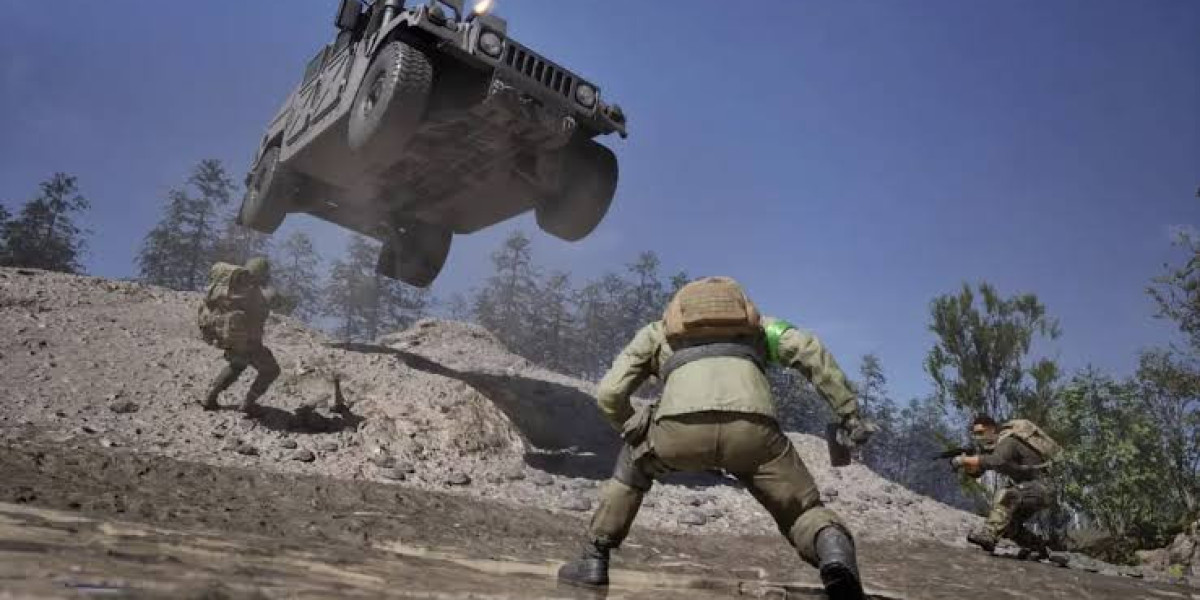

WARDOGS has a battlefield where a well-planned attack can fall apart in seconds, while a seemingly ordinary squad can turn an entire match around through smart positioning and coordinated movement. Its three-team combat structure creates a constant struggle for territory, resources, and battlefield control. The persistent economy adds another layer to every decision, making Wardogs Bot Lobby cash an interesting subject when discussing how players approach progression, equipment purchases, and the financial side of surviving repeated engagements. Instead of treating every encounter as a simple shooting contest, successful players need to understand how combat performance, objective participation, and resource management work together.
Why the Three-Team Battlefield Changes Everything
One of the most interesting features of WARDOGS is its three-team format. Rather than relying on the familiar two-sided conflict, the game places three competing factions against one another in a large battlefield. Each team must fight for control of a randomly positioned objective zone, creating situations where the most dangerous enemy is not necessarily the team currently shooting at you.
The Control Zone measures approximately 2 × 2 kilometers, while the overall battlefield covers a much larger 256-square-kilometer environment. Matches follow a King of the Hill-inspired scoring structure. Teams earn points by maintaining a numerical presence inside the objective, and the first faction to reach 100 points wins.
This system makes positioning just as important as individual shooting ability.
Imagine a situation where your squad has successfully pushed one enemy faction away from the objective. Everyone begins celebrating, ammunition is running low, and the team starts spreading out to collect supplies. Unfortunately, the third faction has been watching the entire engagement. A coordinated counterattack suddenly arrives from another direction, leaving your team caught between two opponents.
That is exactly why experienced players should avoid treating every successful firefight as a reason to abandon their positions.
A few practical habits can make objective battles considerably easier:
• Keep at least one squad member watching the less obvious approach to the Control Zone.
• Avoid sending every available player into the same building.
• Use surrounding structures and terrain to establish alternative defensive positions.
• Communicate enemy movements before they become immediate threats.
• Rotate damaged or exposed players rather than allowing the entire squad to remain vulnerable.
The three-team structure rewards awareness. A squad that understands what the other two factions are doing can often gain more from a carefully timed rotation than from winning another isolated firefight.
Season 2 Introduced New Ways to Fight
The second season, released on October 15, 2026, brought a substantial collection of changes to the battlefield. Four new weapons, four vehicles, additional buildable structures, and a new weather preset expanded the number of tactical possibilities available to players.
One particularly interesting addition was the arrival of heavy rain and thunderstorms.
Weather is more than a visual change in WARDOGS. Thunder can temporarily mask footsteps, making it harder to identify approaching enemies through sound alone. This creates opportunities for coordinated pushes, unexpected flanking movements, and close-range encounters.
Players who previously relied heavily on listening for movement must now pay closer attention to visual information and squad communication.
The new weapons also introduced different approaches to combat.
| Weapon | Category | Tactical Use |
|---|---|---|
| TCX-SPR | Assault Rifle | Flexible engagements at different distances |
| PP-19 Bizon | Submachine Gun | Close-range combat |
| Evo-3 Ultra | Light Machine Gun | Sustained suppressive fire |
| M14 | Marksman Rifle | Controlled medium-to-long-range engagements |
The PP-19 Bizon is particularly interesting in confined environments. Its submachine gun classification makes it worth considering when fighting through buildings, narrow streets, and other locations where engagements can begin at extremely short distances.
Meanwhile, the M14 offers a different experience. Players who prefer deliberate shooting and careful target selection may find a marksman-oriented approach more comfortable than constantly chasing close-range encounters.
The important lesson is that new equipment should not automatically replace familiar loadouts. Every weapon needs to be evaluated according to the map, the current objective, and the role a player intends to perform.
Cash Management Is a Battle Strategy of Its Own
WARDOGS separates itself from many traditional shooters through its persistent cash economy. Players begin with $10,000, and the money they earn can carry over between matches.
This changes the meaning of a successful deployment.
In a conventional FPS, finishing a match might simply mean receiving experience points or unlocking another cosmetic reward. In WARDOGS, the actions performed during combat can directly influence the resources available for future loadouts.
Reviving squadmates, transporting friendly players, and participating in objective control are all meaningful activities within the game's reward structure.
Players should therefore think beyond elimination counts.
A squad member who spends several minutes keeping teammates supplied may contribute significantly to the team's performance, even if their personal kill statistics are relatively modest.
Consider these different battlefield roles:
| Player Role | Main Responsibility | Strategic Value |
|---|---|---|
| Assault | Push enemy positions | Creates opportunities to capture territory |
| Support | Maintain sustained fire and assist teammates | Helps squads survive prolonged engagements |
| Recon | Observe and identify enemy activity | Provides information for rotations |
| Driver | Transport players and equipment | Improves squad mobility |
| Pilot | Operate aircraft and support transportation | Connects distant battlefield positions |
These roles work best when players understand how their responsibilities connect.
For example, an assault player may identify a weak defensive position, but attacking it without support can quickly become a costly mistake. A driver can bring additional squad members closer to the area, while support players provide covering fire. Recon information helps determine whether the attack is likely to encounter another enemy faction.
The result is a much more coordinated operation.
Forward Operating Bases Can Change the Shape of a Match
Building mechanics are another major part of the WARDOGS experience. Instead of treating the environment as nothing more than scenery, players can construct defensive positions and establish forward operating bases.
A properly positioned FOB can provide a valuable staging point for attacks and defensive operations.
However, building in the wrong location can waste time and resources. An isolated structure far from useful routes may offer little practical value, especially if the opposing factions can easily approach it from multiple directions.
Good FOB placement should consider three important factors.
Distance from the objective
A base should be close enough to support the team's operations without being so exposed that it becomes an easy target.
Available cover
Buildings, terrain elevations, and surrounding obstacles can influence how easily an enemy approaches the position.
Squad accessibility
A base is much more useful when teammates can reach it without spending excessive time crossing exposed ground.
Destruction mechanics make this system particularly interesting. Enemies can attack structures and use heavy weapons to remove defensive advantages. Consequently, players should avoid assuming that a fortified location will remain safe throughout an entire match.
A strong defensive position needs observation, maintenance, and a clear escape plan.
Vehicles Are Powerful, but Timing Matters
Vehicles provide another way to influence the battlefield. Season 2 expanded the selection with additions such as the Wolf-110, the armed Wolf-110 equipped with an M2 Browning, the T-72B3 tank, and the Flakpanzer Gepard.
These vehicles serve different purposes, so choosing one should depend on the situation rather than personal preference alone.
The standard Wolf-110 is a useful option for players who need rapid transportation. Its armed version offers additional firepower, making it more suitable for situations where a squad expects resistance along its route.
The T-72B3 introduces a heavier ground-combat option. It is slower than the L2A6 but cheaper and slightly more fuel-efficient, which gives players another consideration when planning vehicle purchases.
The Flakpanzer Gepard fills an anti-aircraft role, making it particularly relevant when aerial threats become a major concern.
| Vehicle | Primary Strength | Best Tactical Consideration |
|---|---|---|
| Wolf-110 | Mobility | Rapid squad transportation |
| Wolf-110 with M2 Browning | Mobility and firepower | Armed movement through dangerous areas |
| T-72B3 | Heavy armor | Ground support and sustained engagements |
| Flakpanzer Gepard | Anti-aircraft capability | Responding to aerial threats |
A common mistake is purchasing an expensive vehicle simply because it looks impressive. Heavy equipment can become a liability when the team lacks the coordination to protect it.
A tank without infantry support may become an easy target for enemies approaching from buildings or concealed positions. Likewise, an aircraft or transport vehicle needs a clear purpose instead of being purchased just to travel around the map.
The Upcoming Season 3 Could Change Urban Combat
The next major development is already attracting attention. BULKHEAD announced that WARDOGS Season 3 is scheduled for November 12, 2026.
One of the most interesting announced additions is Sabatulo, a new map designed around urban warfare and close-quarters combat.
This could create a noticeably different experience from engagements across more open terrain.
Urban environments naturally encourage different movement patterns. Buildings provide cover, streets create predictable firing lanes, and narrow entrances can become dangerous chokepoints. A squad that performs well in open-field engagements may need to rethink its entire approach when moving through dense urban areas.
Players preparing for the new map should consider practicing several fundamentals:
• Check windows and elevated positions before crossing open streets.
• Avoid entering buildings without checking alternative exits.
• Keep enough ammunition for prolonged close-range engagements.
• Coordinate movement through intersections instead of sending teammates forward individually.
• Use destruction mechanics carefully when ordinary entrances become dangerous.
The developers have also discussed their approach to cheating, exploiting, and improvements following the second season. These subjects are important for the long-term development of a competitive multiplayer environment.
Season 3 therefore represents more than another content release. Its urban setting and development priorities could influence how players approach team composition, equipment purchases, and objective control.
Final Thoughts
WARDOGS becomes considerably more interesting when players stop measuring success through eliminations alone. Objective positioning, communication, transportation, construction, and persistent financial decisions all contribute to the outcome of a match. Whether preparing for Sabatulo or improving an established squad strategy, understanding these interconnected systems is essential. Players exploring different progression approaches may also encounter discussions about Wardogs Bot Lobbies, particularly when comparing alternative ways of approaching the game's cash economy and overall progression.



