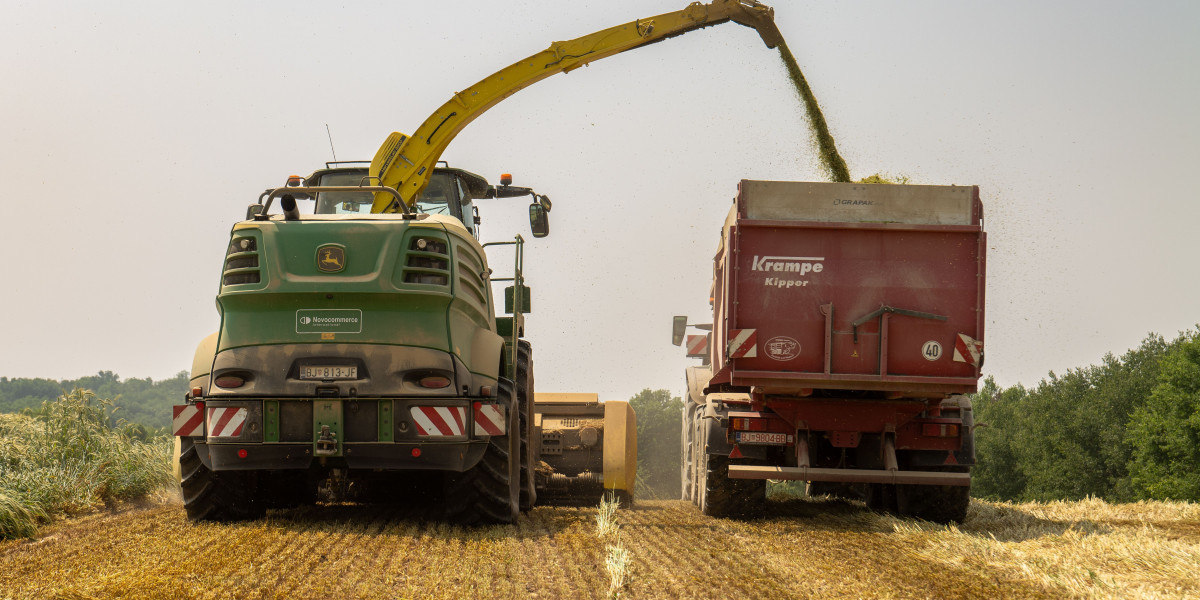

Technological innovation is becoming an important part of agricultural development, influencing how farmers cultivate, harvest, and manage crops. The haying and forage machinery industry is also experiencing changes as manufacturers introduce improved equipment designs and technology-supported features. These developments are helping agricultural producers manage harvesting activities with greater flexibility. From automated balers to advanced forage harvesters, modern machinery is changing traditional approaches to forage production and livestock feed preparation.
The growing focus on precision forage management solutions reflects the agricultural industry's interest in improving equipment performance and simplifying field operations. Farmers are increasingly considering machinery that can support accurate operation, convenient monitoring, and effective crop handling. Manufacturers are responding by exploring electronic systems, automation, improved machine configurations, and technologies that support different agricultural environments.
One of the major areas of innovation is automated machinery operation. Agricultural equipment manufacturers are developing systems that help operators monitor machine functions and manage important harvesting activities. Automated controls can support consistent equipment operation while reducing the need for frequent manual adjustments. Such features are particularly useful when farmers manage large fields or operate several machines during harvesting periods.
Smart baling technology is another developing area. Balers are becoming more sophisticated through the introduction of monitoring systems and improved operational controls. These features can help operators understand machine performance, manage material flow, and identify maintenance requirements. Equipment manufacturers are also focusing on designs that simplify cleaning and servicing, helping farmers manage their machinery more conveniently.
Precision agriculture is influencing the design of haying and forage machinery as well. Technologies such as GPS guidance, digital monitoring, and connected agricultural systems can support more organized field operations. These technologies help farmers manage equipment movement and understand operational activities. Their integration into agricultural machinery reflects the broader movement toward data-supported farming.
Forage harvesters are also benefiting from engineering improvements. Modern equipment is being designed to handle different crop materials and field conditions. Improved cutting mechanisms, processing systems, and operator interfaces can support more convenient forage preparation. These machines are particularly important for agricultural operations that prepare silage for livestock feeding.
Another important development involves machinery compatibility. Farmers often use different tractors and agricultural attachments across their operations. Equipment manufacturers are therefore focusing on designs that offer better compatibility and operational flexibility. Easy attachment systems and adaptable machine configurations can make it more convenient for agricultural producers to manage their equipment.
Sustainability is also influencing agricultural machinery development. Manufacturers are exploring equipment designs that support more efficient resource utilization and reduce unnecessary operational losses. Improved machine maintenance, efficient engine technologies, and durable components are becoming important considerations. Farmers are also showing interest in equipment that can support long-term agricultural operations without creating excessive maintenance difficulties.
However, technological adoption is not without challenges. Advanced machinery may involve higher purchasing costs and require operators to develop new technical skills. Farmers in areas with limited maintenance facilities may also face difficulties when dealing with sophisticated equipment. Manufacturers must therefore balance innovation with affordability, reliability, and ease of use.
Training and after-sales support are becoming increasingly important for machinery companies. Providing technical guidance, replacement components, and maintenance assistance can help customers operate equipment more confidently. Strong dealer networks and service availability can also influence purchasing decisions.
Looking ahead, innovation will continue to shape the haying and forage machinery market. Automation, precision farming, digital monitoring, and improved equipment engineering are expected to remain important development areas. Companies that combine technological progress with practical agricultural requirements will be better positioned to address the changing needs of farmers. The industry's evolution will ultimately depend on delivering machinery that makes forage production more manageable, reliable, and adaptable.
FAQs
Q1. How is technology changing haying and forage machinery?
Technology is introducing automated controls, digital monitoring, GPS guidance, precision farming features, and improved equipment designs that help simplify harvesting operations.
Q2. What is precision forage management?
Precision forage management involves using suitable machinery and technology to manage forage harvesting activities more effectively, including cutting, collection, processing, and storage



