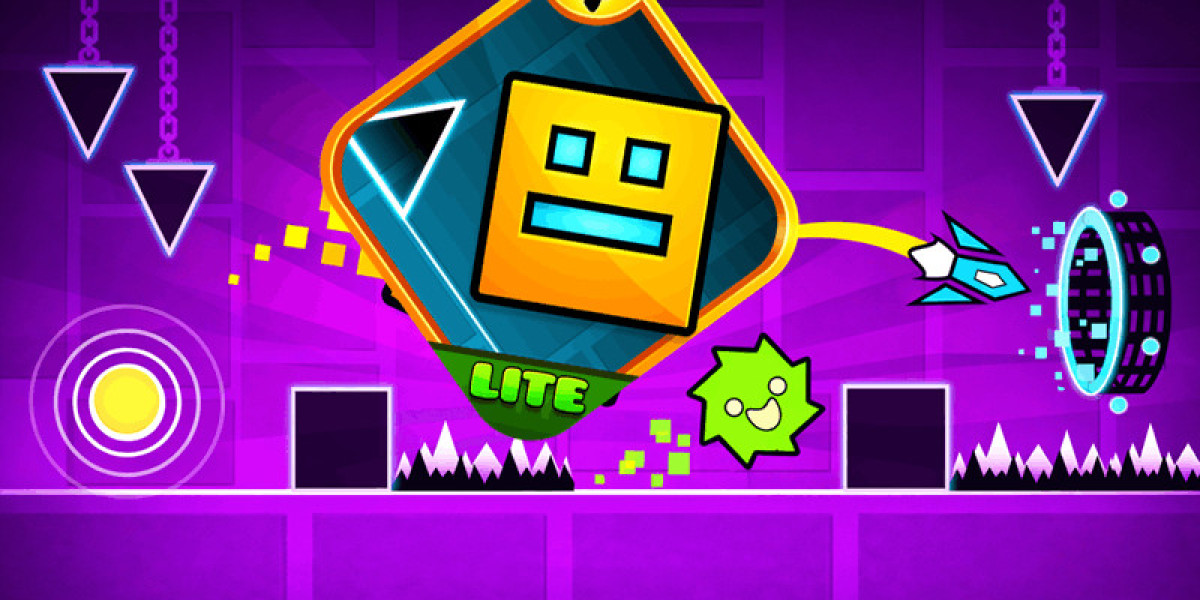

Geometry Dash is a fast-paced platform game in which players guide an icon through obstacle-filled levels, moving in time with the music. Its simple controls—often just a tap or click—hide a demanding challenge: one mistimed input can send the player back to the beginning. The result is a game about rhythm, repetition, and learning from failure, as well as a creative platform where players can design and share levels of their own.

How the game works
In standard gameplay, the icon moves forward automatically. Players jump, fly, or otherwise navigate hazards using carefully timed inputs. Levels introduce changing movement styles and increasingly complex patterns, so success depends on recognizing what is coming and responding precisely. Music is more than a soundtrack: its beats and phrases often provide useful timing cues.
The game’s difficulty can be intense, particularly for newcomers. A level that looks straightforward may demand dozens or hundreds of attempts before its sequence becomes familiar. This steep learning curve is part of the appeal for some players, who value the satisfaction of finally completing a difficult section. For others, frequent restarts can feel frustrating. Practice options and easier levels help make that challenge more approachable.
Learning and improving
Improvement is less about quick reflexes alone than about building consistency. Beginners can start with manageable levels, learn how different movement modes behave, and focus on one difficult section at a time. Replaying a challenging passage helps turn unfamiliar inputs into a reliable sequence. Listening to the music can also clarify when jumps or other actions should happen.
Patience matters. Repeated failure is expected, but each attempt can reveal something useful: a late jump, an unclear visual cue, or a rhythm that was misread. Players who treat attempts as feedback rather than proof of failure are more likely to progress. Experienced-player guides commonly emphasize practice, pattern recognition, and gradual improvement rather than relying on a single shortcut.
Custom levels and the editor
A major part of Geometry Dash is its level editor, which lets players create stages with different lengths, difficulty levels, visual styles, and gameplay ideas. Creators can build anything from a simple obstacle course to a carefully synchronized, elaborate experience. The editor’s flexibility gives the community a way to keep the game fresh well beyond its official levels.
Creation also requires care. A visually impressive stage is not necessarily enjoyable if its obstacles feel unfair or its timing is inconsistent. Play-testing is essential: creators should replay their work to find hidden bugs, confusing transitions, and sections that are harder than intended. Feedback from other players can help identify problems the creator has overlooked. Community tutorials and creator resources offer guidance for people who are learning the editor.
Players can discover community-made levels through the game’s level-browsing tools, including featured selections. Some levels may require downloading their music before play. Browsing is a useful way to find new challenges, study different design approaches, or gather inspiration for a first creation.
Why it continues to appeal
Geometry Dash brings together two complementary experiences: mastering levels made by others and building levels for the community. Its demanding gameplay can be rewarding, while its editor gives players room to express creativity and share their work. The same difficulty that excites committed players may discourage those looking for a relaxed experience, so it is best approached at a personally comfortable pace.
Ultimately, Geometry Dash is more than a test of timing. It is a cycle of experimentation: learn a pattern, attempt a challenge, refine an idea, and try again. That combination of skill, music, and community creativity is what gives the game its lasting appeal.



